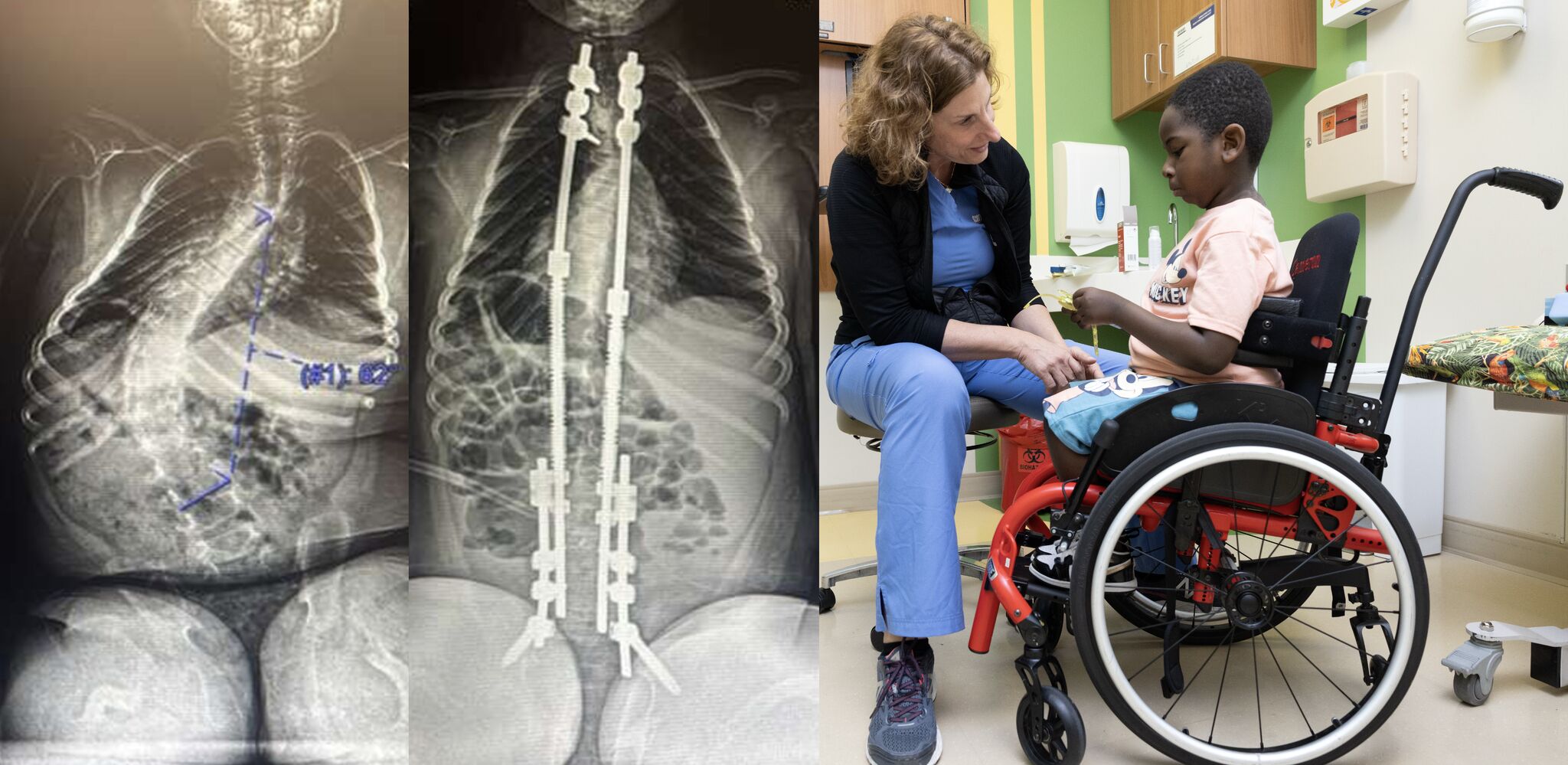
On April 20, a child with Early Onset Scoliosis in Dallas became the first patient in the United States treated with the Spring Distraction System™. That sentence took eleven years to write.
In 2015, the first SDS™ was implanted at Orthopedie UMC Utrecht. It started with an implant created from bits-and-pieces to treat a life-threatening scoliosis in a 6 year-old. There was a need for continuous distraction, which was reason to apply a spring. It became the start of a spring-based growth friendly implant that worked with the spine instead of against it. And it turned out that one operation could replace the cycle of repeated surgeries or lengthening interventions that defines early-onset scoliosis treatment today.
Since then, more than 150 children have been treated in Utrecht. Ten years of continuous follow-up. The first randomized controlled trial in pediatric spine surgery. Disc preservation where rigid systems show deterioration. Twenty-seven children who completed their full treatment with mobile spines, maintained correction, and near-physiological growth.
In January the FDA cleared the latest version of SDS™ — which includes dedicated polyethylene sliding parts to diminish metal wear — through the 510(k) pathway.
The first US procedure was performed at Scottish Rite for Children by pediatric orthopedic surgeon Amy McIntosh, in a young patient with neuromuscular scoliosis. The care team chose SDS™ for its continuous corrective distraction and the prospect of fewer trips back to the operating room or out-patient clinic.
This was not a solo effort. The Dallas team followed the system from its early development, and the institution’s international reputation in pediatric spine made it a natural place for the first procedure outside the Netherlands.
René Castelein, one of the inventors of the system, who was in the operating room, put it simply afterwards.
“I have performed many of these procedures, and she made me think, is it really that easy. I am happy the patient is doing well.”
From a university hospital in Utrecht to an operating room in Texas. From academic research to R&D efforts to clinical practice. The trajectory is not fast. A dynamic system that grows with a child is now in the United States, and the work is to keep proving it, one follow-up at a time.