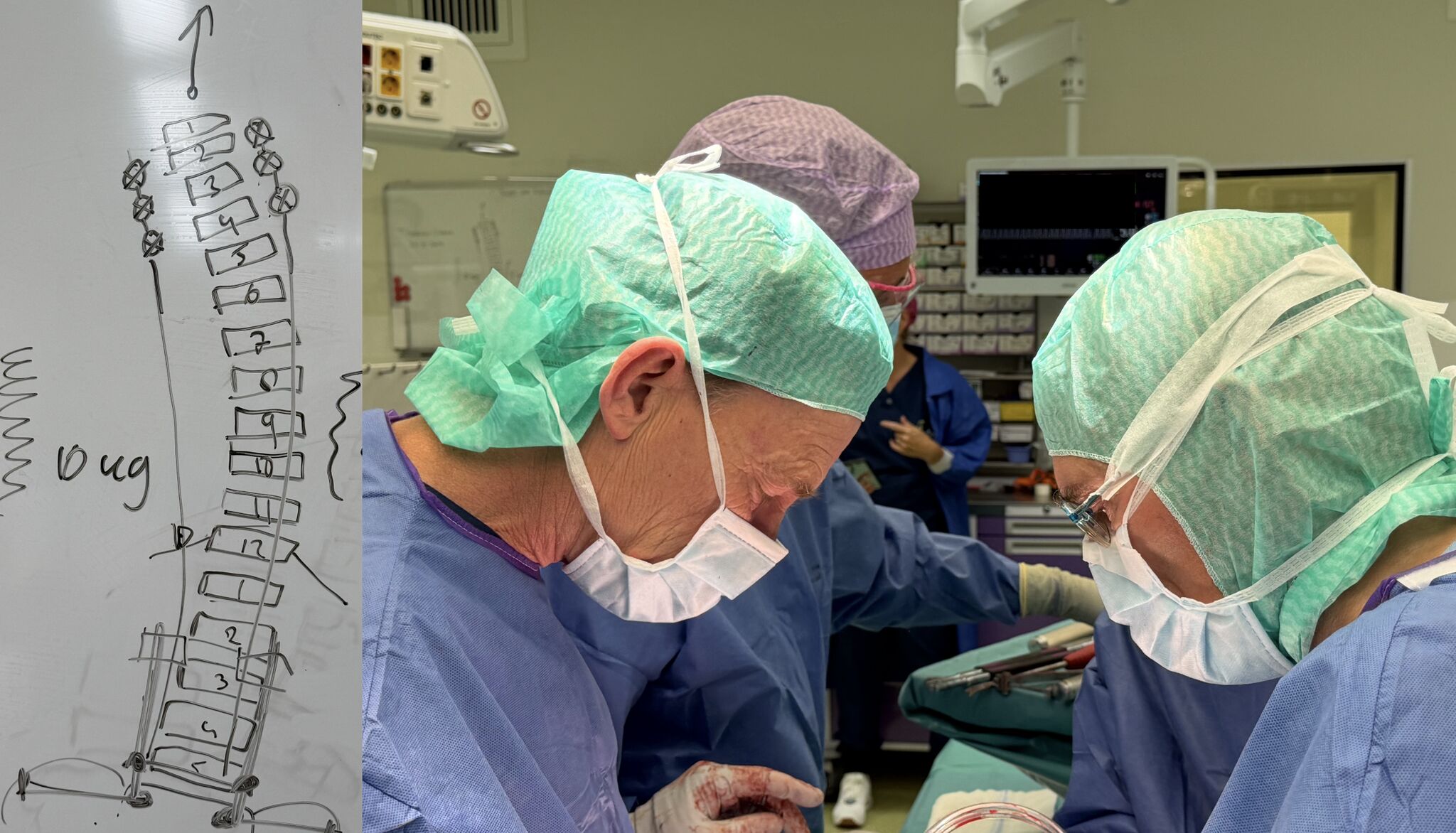
Enable continuous dynamic guided growth and reduce repeated interventions for your patients.
Also applicable in the most complex EOS cases.
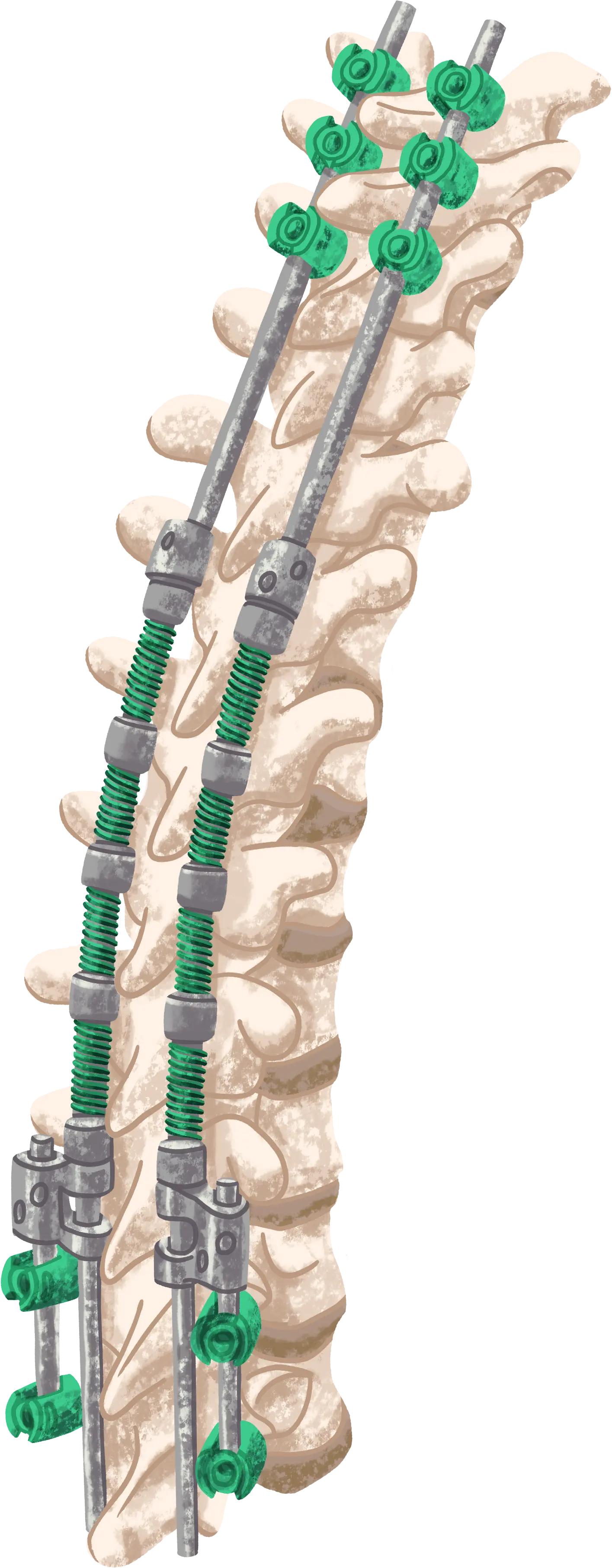
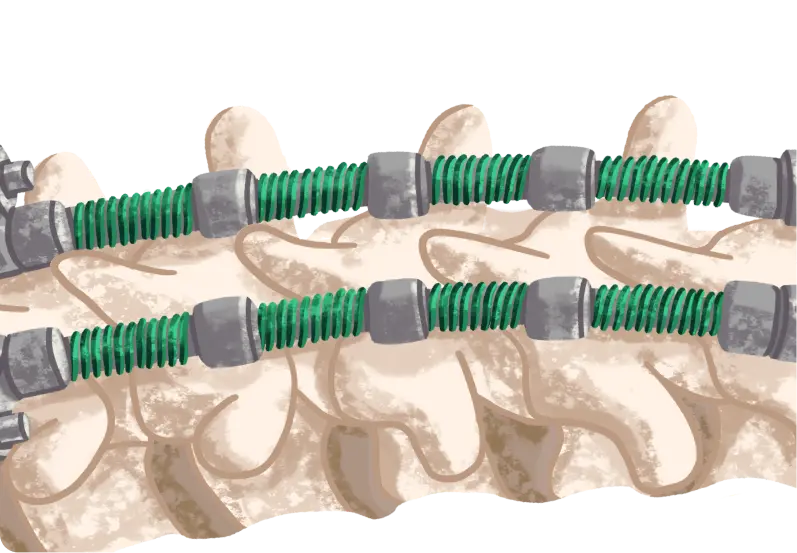
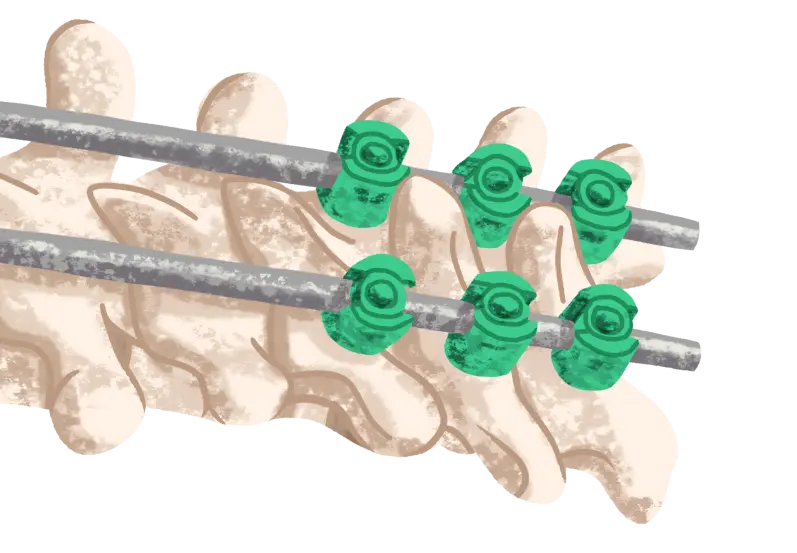
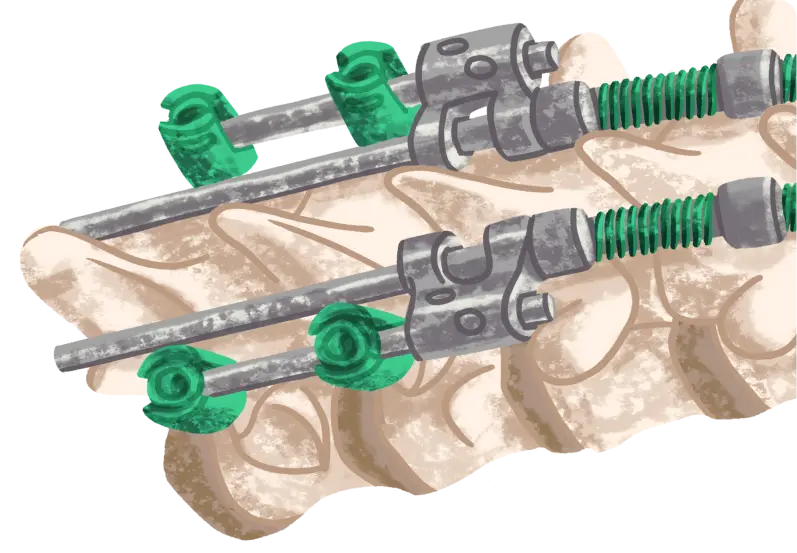
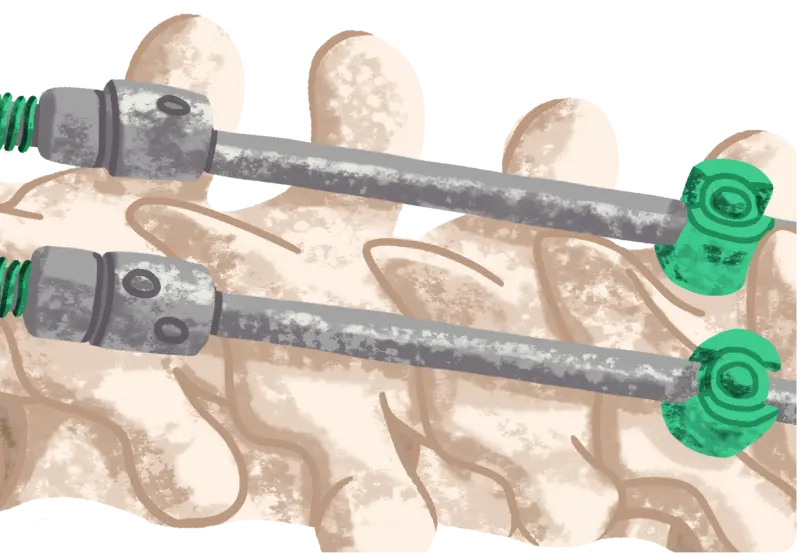
A dedicated spring does the distracting
At the core of SDS™ is a 100N purpose-engineered titanium alloy spring, pre-tensioned between the buttress and the sliding connector, the Axial Sliding Bearing (ASB). It delivers a continuous, dynamic distraction force in the physiological range, easing gradually as the spine grows. The Ultra-high-molecular-weight polyethylene (UHMWPE) bushings at specific distances prevent direct spring-rod contact.
Universal pedicle screw compatibility and routine workflow
SDS™ is compatible with universal pedicle screws, so it anchors to the screw system your team already trusts. You place proximal and distal anchors through limited incisions, contour the rod in both planes, mount the spring and compress it maximally, then lock it in place by tightening the buttress at the rod. Pass the rod with the compressed spring between the ASB and buttress sub-fascially. Once the rod is fixed to the anchor screws the spring can be released, by removing the spring locker, after which the viscoelasticity of the tissues already gives a few millimetres of growth in the days after the operation. Your per-operative routine stays much the same; the growth guidance is all SDS™.
Polyethylene at every sliding surface
The rod travels through a sliding connector, the Axial Sliding Bearing (ASB), lined with Ultra-high-molecular-weight polyethylene (UHMWPE). At specific distances UHMWPE bushings are integrated in the spring. These features are designed to avoid direct metal-on-metal contact: they reduce friction, and are designed to minimise wear debris and reduce the risk of metallosis.
Materials chosen to stay stable and still let the parts move
The highly polished 5.5 mm cobalt-chrome rod provides stiffness, adequate fatigue strength and minimised sliding friction, and can still be contoured to the required anatomical configuration. The 100N titanium alloy spring is built for years of cyclic loading and carries three to five years of growth capacity. UHMWPE gives a low-friction sliding surface at the ASB and as bushings around the spring. All three materials have long track records in spinal and arthoplasty implants.
Growth that never pauses.
A child’s spine grows every day, not at scheduled intervals. The spring answers with a physiological tolerated continuous distraction force.
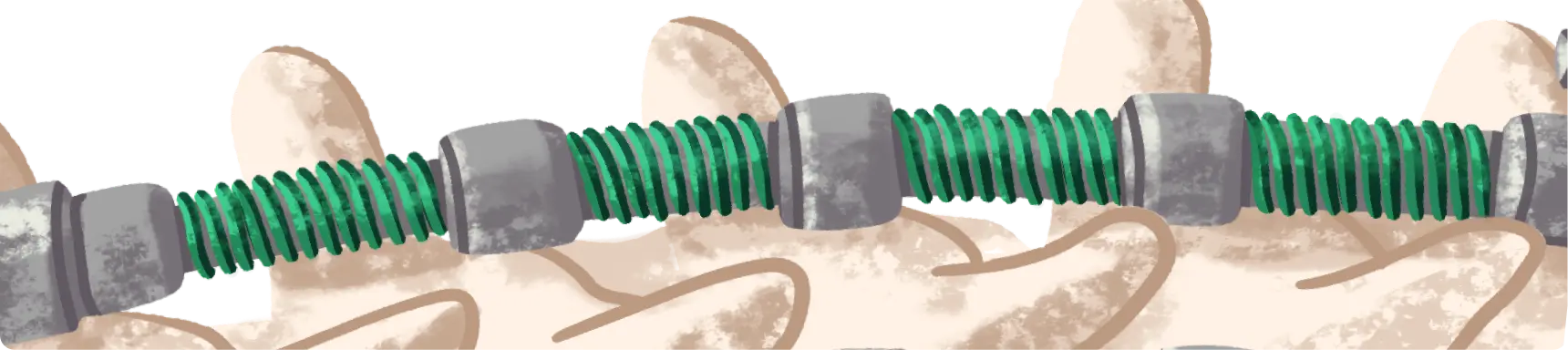
Continuous distraction, no manual lengthening
The spring distracts every day, at a force low enough to avoid ligament and tissue damage and high enough for the tissues to follow in a physiological growth range. There is no lengthening schedule and no lengthening appointment.
In the 64-patient cohort including all etiologies, spinal growth stayed linear over the first four years, with no sign of diminishing returns (Tabeling et al. 2026).
Load sharing instead of point load bearing
SDS™ is dynamic by design. The ASB slides along the rod, so the spine keeps carrying load under the spring’s force, in the physiological range. Finite element analysis supports the principle: the discs stay loaded instead of shielded, and stress on rods and screws stays low.
A recent retrospective cohort study found zero per cent net disc height loss within the distraction zone of the implant at two years (Hasti et al. 2026).
As few moving parts as possible
The distraction mechanism is a spring, a buttress and a sliding connector over a polished cobalt-chrome rod. There is nothing to power and nothing to activate. Fewer moving parts and no forceful distraction moments mean fewer possible points of failure.
A force that cannot overshoot
The 100N spring delivers its set force and never more. It eases as the spine lengthens, so the child’s own growth sets the pace.
That force sits within the safe range identified in a systematic review of distraction forces on the spine (Lemans et al. 2021).
Zero planned lengthenings
No lengthening surgeries and no out-patient clinic lengthening visits are scheduled.
By design
47% curve correction
Mean main-curve correction in 64 children, 51% in neuromuscular and idiopathic curves. Maintained in congenital and neuromuscular curves at a mean 3.7 years.
7 to 10 mm of T1–S1 growth per year
True growth after the initial correction with no slowing over four years.
0.18 unplanned returns per patient-year
Across all design generations, in 64 children at a mean 3.7 years, with no lengthening procedures scheduled.
0.10 unplanned returns per patient-year after the first design iteration (rod breakage and kyphosing at connector) update.
Unplanned returns per patient-year in the first 17 children with 5.5 mm rods and stacked connectors, at a mean 1.9 years. No rod fractures.
Level 1 Evidence
SDS™ was studied in the first randomized controlled trial of growth-friendly implants in neuromuscular early onset scoliosis: the BiPOWR trial. About 50% correction, maintained at one year.
Quality of life up at one year
EOSQ-24 overall score rose from 61.6 before surgery to 68.9 at one year.
Quality of life up at two year follow-up
HRQoL decreases immediately following SDS™ surgery but quickly recovers and exceeds pre-operative levels at 2-year follow-up in all domains.
Clinical results were obtained with earlier, not regulatory approved generations of SDS™ in prospective studies at UMC Utrecht and two partner centers. More than 90% of patients were treated at the inventing center.
The questions you ask us.
-
Why does continuous distraction beat intermittent lengthening, mechanically?
Mechanically, continuous distraction outperforms intermittent lengthening by maintaining lower, sustained forces that align with the viscoelastic properties of the spinal column. Intermittent lengthening relies on large, episodic mechanical displacements that produce high peak forces at the ligaments and bone-disc interface, excessive strain at the bone-screw interface, and over time leading to progressive stiffness or auto-fusion that yields diminishing returns over time. In contrast, continuous (dynamic) distraction exploits gradual tissue creep and continuous biological remodeling, distributing force evenly without acute mechanical spikes—thereby preserving spinal flexibility, optimizing axial growth, and significantly reducing hardware failure rates like rod fracture or anchor pullout.
-
How often will the child need to come back to the clinic?
There are no lengthening procedures to schedule, so follow-up is driven by the child rather than by the implant. Visits are the ordinary radiographic and clinical checks a growing spine needs, almost never appointments the device creates.
-
Does the spring need to be replaced as the child grows?
The spring is pre-tensioned to cover a 3-5 year of expected growth over the construct and eases gradually as it extends. Revision is driven by the same things that drive it in any growth-friendly system — curve behaviour, anchor position, the child’s own development — rather than by the spring running out.
-
Is SDS™ suitable for neuromuscular and congenital curves?
Yes. The published cohorts include neuromuscular, congenital, syndromic and idiopathic curves, and the randomized controlled trial that studied SDS™ was conducted in neuromuscular early onset scoliosis specifically.
-
What happens at the end of growth?
The construct can be removed, converted to a definitive fusion, or left in place where an add-on implant feature can lock the SDS™ in place. The decision is the surgeon.
-
How is SDS™ being made available?
Through a controlled release in a small number of leading pediatric spine centers, each prepared and supported by the surgeons who invented the system. Capacity is deliberately limited while that support can be given in person.
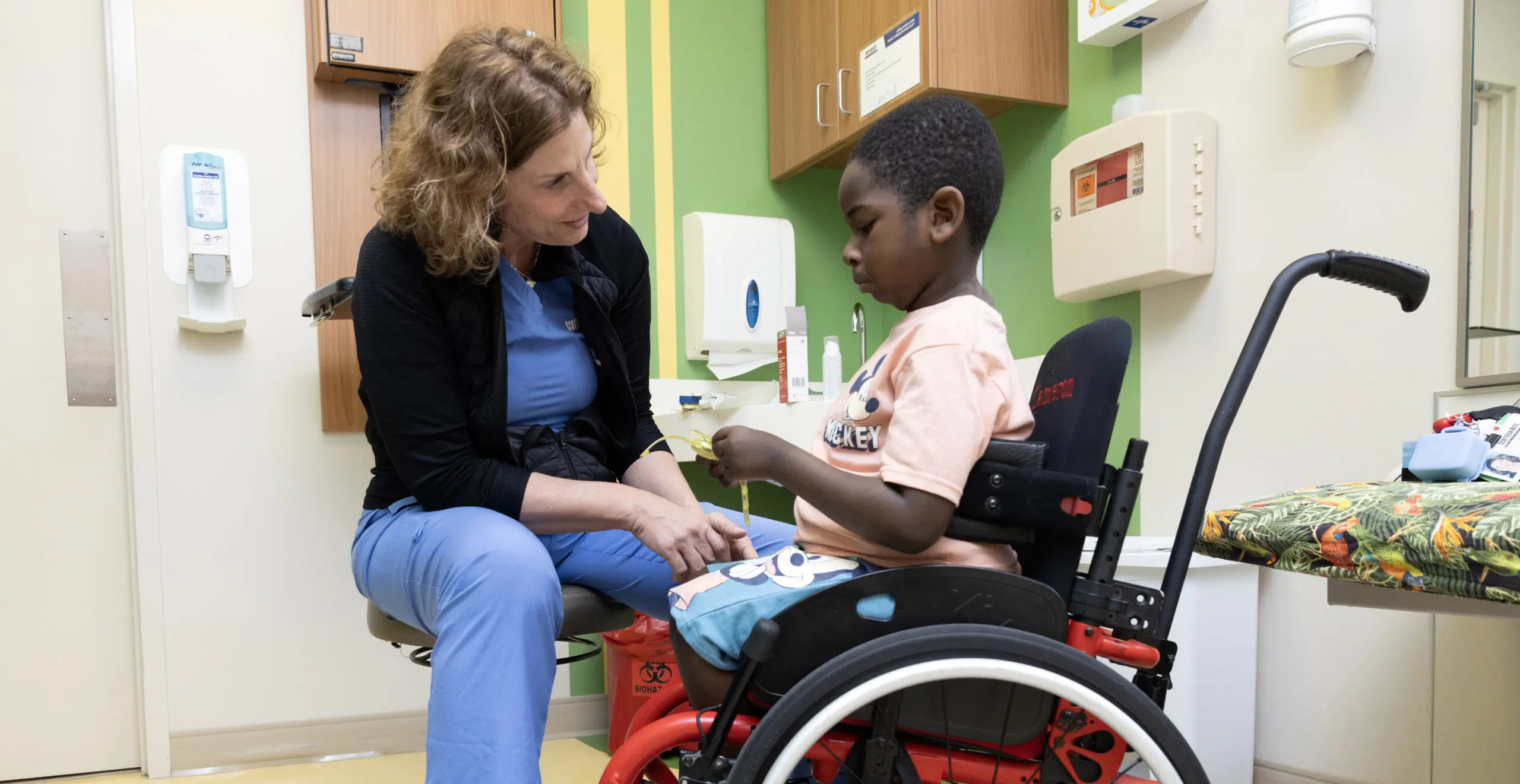
First in the United States: Scottish Rite for Children, Dallas
-

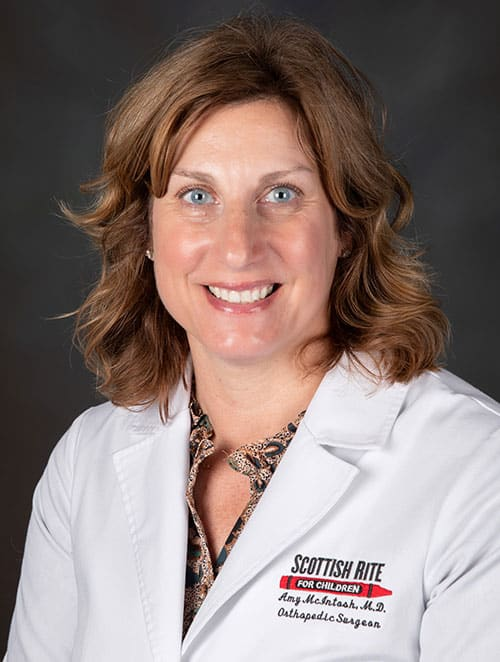
Dr. Amy L. McIntosh
at Texas Scottish Rite HospitalThese patients often face years of treatment, multiple procedures and significant disruptions to childhood. A system that provides continuous growth guidance while potentially reducing the burden of repeated interventions represents an important step forward in pediatric spine care.
Dr. Amy L. McIntosh about the Spring Distraction System™
Read the original article
First adopters, supported by a dedicated team
SDS™ is being introduced through a controlled release, in a small number of leading pediatric spine centers in the United States and Canada, with Australia, New Zealand and the UK to follow.
The pace is deliberate. Every early case is prepared and supported by the surgeons who invented the system and have used it for more than ten years.
The inventors
-
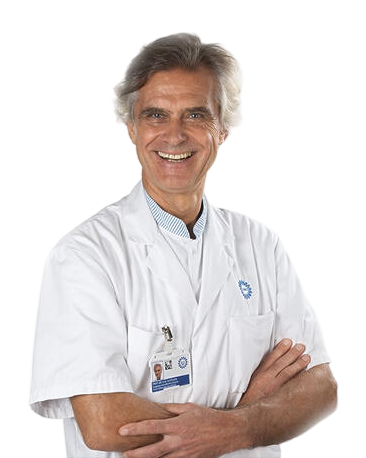
Prof. dr.
René Castelein
Co-inventor of SDS™ and CMO
-
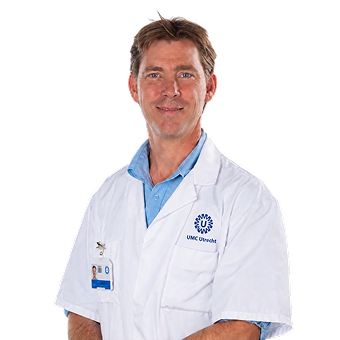
Prof. dr.
Moyo Kruyt
Co-inventor of SDS™ and Spine Surgeon at UMC Utrecht
News & Editorials
-
4 September 2026
Eight children in the United States have now been treated with SDS™
Three centres, five surgeons, a little over four months — and a pace chosen for clinical success rather than for market access.
Read Article -
23 July 2026
The 160th child treated with SDS™ at UMC Utrecht
At the WKZ in Utrecht, the 160th child with Early Onset Scoliosis was treated with SDS™ inside the ongoing clinical study.
Read Article -
26 June 2026
First US SDS™ implant at Scottish Rite for Children
On April 20 a child in Dallas became the first patient in the United States treated with the Spring Distraction System™.
Read Article -
2 February 2026
FDA clearance is not the finish line. It’s the starting gun.
A pre-Series A round closes, and with it a controlled introduction in the US and Canada, a CE trajectory in Europe and a route of its own for the UK.
Read Article